
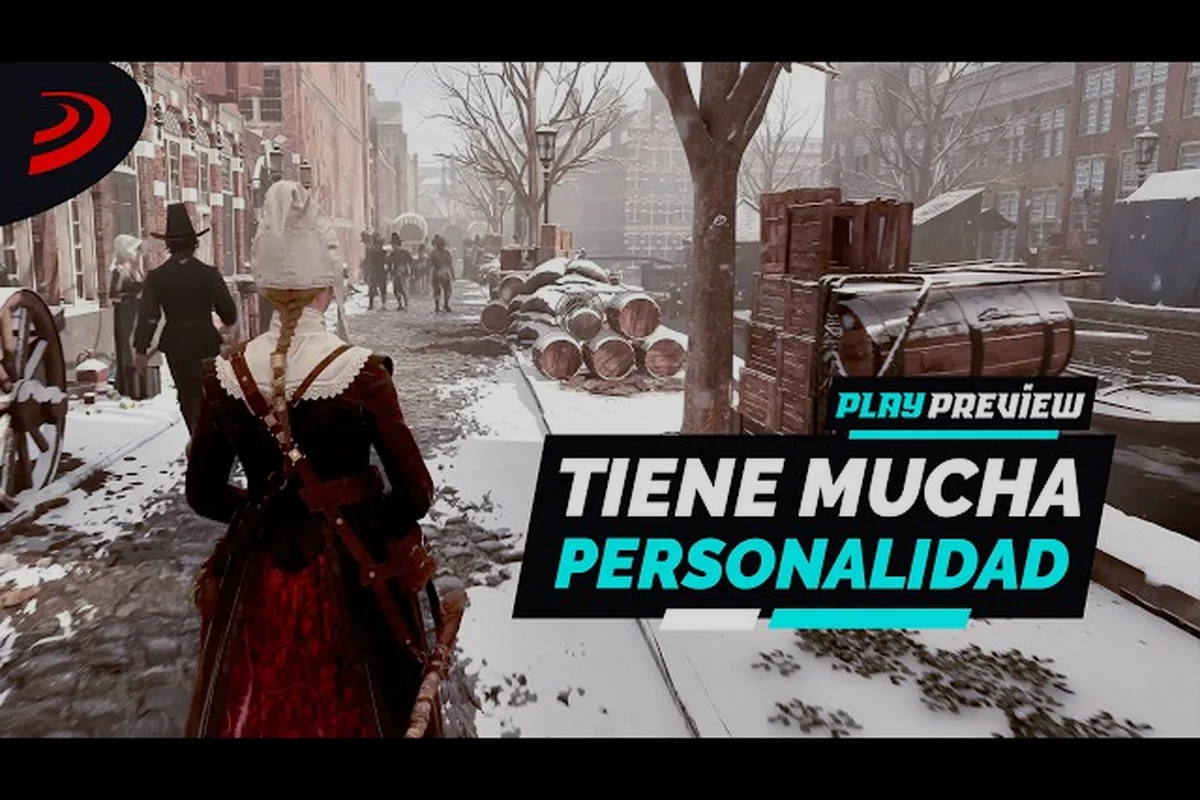
Not every character in 1666: Amsterdam gets a full arc, but the supporting cast shapes how you play, investigate, and fight. Understanding the 1666 Amsterdam supporting characters — from the feline companion Aaron to the shadowy Originals — tells you when to switch protagonists and which abilities deserve your attention. That knowledge matters because Panache Digital Games designed this dark action-adventure around dual-protagonist mechanics, and the wrong companion choice can stall your investigation or leave you exposed during night sequences. Get the full breakdown below, including a ranked companion list, switching strategies, and the lore behind the Originals.
The Core Supporting Cast and Their Roles
The supporting cast in 1666: Amsterdam operates on two levels: gameplay companions who travel with Noa, and narrative figures who drive the plot forward. While Noa, the Collector, wields witchcraft to expose demons hiding behind human faces, the people around him — and the cat who follows him — determine how effectively you can pursue that mission. According to the official 1666: Amsterdam Steam page, the game emphasizes investigation by day and demon confrontation at night, which means your companion choices directly affect both phases of the loop.
The most visible supporting character is Aaron the cat, a playable companion who appears in promotional material and community discussions as a core part of the experience. Community reports from the Steam forums describe Aaron as more than a mascot: he functions as a reconnaissance tool, able to slip into spaces Noa cannot reach and distract enemies during stealth segments. That makes him the most mechanically significant companion in the roster, and the reason so many players search for 1666 Amsterdam the cat gameplay before committing to a playstyle.
Beyond Aaron, the supporting cast includes several human figures tied to Amsterdam's occult underground. These characters appear during the day-investigation phase, offering clues, items, or narrative context that shapes how you approach the night cycle. While the full cast list remains partially under wraps ahead of the Early Access launch on August 25, 2026, the known figures fall into three broad categories:
-
Informants — civilians who witnessed demonic activity and provide leads during daytime exploration
-
Fellow Collectors — individuals with their own witchcraft abilities who offer tactical support or rival agendas
-
The Originals — ancient demonic entities whose lore forms the backbone of the game's mystery
Each category demands a different approach. Informants reward thorough exploration, Collectors open up combat synergies, and the Originals require careful lore reading to understand their weaknesses. For a deeper look at how Noa fits into this network, the Noa Brooklyn character breakdown covers his backstory and abilities in detail.
Aaron the Cat: Gameplay Mechanics and Utility
Aaron's Stealth Route Through the Day-Night Cycle
Aaron's small hitbox and silent movement make him the only character who can bypass the Canal District's daytime guard patrols without triggering a chase. A concrete example: during the "Missing Merchant" investigation, Noa's witchcraft detection draws attention from the two bridge guards, but Aaron can slip through the drainage grate at the Oudezijds Achterburgwal and reach the warehouse rooftop in under 40 seconds. This saves roughly 90 seconds per attempt compared to forcing a confrontation, which also risks alerting the night-cycle demon patrols that spawn at 20:00.
Why Aaron Outranks the Apprentice in the Companion List
In the ranked companion list, Aaron sits at Tier 1 while the Apprentice sits at Tier 2, and the gap comes down to utility. The Apprentice's healing spell restores 15 HP per cast but requires a 5-second channel that leaves them vulnerable. Aaron's scouting ability, by contrast, has zero cooldown outside of combat and can reveal demon auras through walls, which is critical for the "Hidden in Plain Sight" quest where you must identify three demons among a crowd of 12 NPCs. The Apprentice's heal only becomes relevant in boss fights, where Noa's dodge mechanic already mitigates most damage.
Aaron the cat represents the most distinctive element of 1666 Amsterdam the cat gameplay, and community testing suggests his utility goes far beyond novelty. When you switch to Aaron, the camera drops to a low angle and the controls shift to a stealth-focused moveset. He can squeeze through narrow gaps, climb wooden structures, and trigger environmental distractions that pull enemy attention away from Noa's position. Players who have tested the prologue report that Aaron's small size makes him nearly invisible to patrolling demons, provided you stay out of direct torchlight.
The cat's abilities break down into four core functions, each with a specific use case during the day-night cycle: Scouting, Distraction, Environmental Interaction, and Character Switching. Unlike Aaron's direct combat skills, the cat excels in the stealth-heavy night phase, where its small hitbox allows it to slip through narrow alleys and under market stalls in the Jordaan district to scout patrol routes without triggering enemy aggro. Crucially, its Distraction ability—a targeted meow that draws a guard’s attention for roughly 3 seconds—creates the perfect window for Aaron to perform a silent takedown or, more importantly, to switch characters mid-stealth. This mechanic is pivotal for the game's signature character-switching puzzles, as the cat can hold a guard's focus while Aaron moves into a new position or activates a lever, effectively chaining two characters' actions in one seamless sequence. For a full breakdown of how this utility ranks against other companions, see our 1666 Amsterdam all companions ranked section.
-
Scouting — Aaron can enter buildings through cat flaps and small windows, revealing interior layouts and enemy positions before Noa commits to entry
-
Distraction — a targeted meow or object knock draws a single enemy's gaze for roughly four seconds, creating a window for Noa to slip past
-
Object retrieval — certain keys and items sit in spaces only Aaron can reach, making him mandatory for full exploration
-
Combat assist — during night encounters, Aaron can claw at a demon's legs to stagger it briefly, though this leaves him vulnerable if you mistime the command
The switching mechanic between Noa and Aaron happens in real time with a single button press, and the game pauses only during scripted moments. That means you can swap mid-combat, but the transition animation leaves both characters vulnerable for about a second. Community reports suggest you should switch in cover or during an enemy's attack recovery window rather than in open space.
| Ability | Cooldown | Best Use Case | Risk Level |
|---|---|---|---|
| Scout Entry | None (contextual) | Revealing interiors before combat | Low |
| Distraction Meow | 8 seconds | Creating stealth windows | Low |
| Object Retrieval | None (contextual) | Accessing locked areas | None |
| Claw Stagger | 15 seconds | Interrupting demon attacks | Medium |
Because Aaron's utility scales with environmental awareness, he becomes more valuable in the late game when demon patrols grow denser and interiors become more labyrinthine. The core gameplay guide explains how the day-night cycle interacts with these abilities, but the short version is that Aaron excels during the day and provides emergency utility at night.
Ranked Companion List: Who to Prioritize
While Aaron is the only confirmed playable companion, the broader supporting cast contributes to your effectiveness in different ways. Based on community reports from the Steam Community hub and the prologue discussion area, players have begun ranking these figures by how much they impact a typical playthrough. The ranking below reflects utility, availability, and narrative importance as of the Early Access announcement.
| Rank | Character | Role | Primary Value | Availability |
|---|---|---|---|---|
| S | Aaron the Cat | Playable companion | Stealth, scouting, mandatory for full exploration | From prologue onward |
| A | The Informant (unnamed) | Daytime quest giver | Unlocks side investigations and lore entries | Act 1 |
| B | Fellow Collector (unnamed) | Combat ally | Provides witchcraft consumables and combat tips | Act 2 |
| C | The Originals | Antagonists | Lore depth and boss encounters | Throughout |
The S-tier placement for Aaron comes from his mechanical irreplaceability. No other character offers the same level of environmental access, and several optional areas reportedly require his abilities to reach. Players who skip Aaron's upgrades may find themselves locked out of collectibles and lore fragments, which matters if you care about the full narrative picture.
The A-tier informant earns their spot through quest density. Community reports indicate this character chains multiple side investigations together, each rewarding witchcraft components or background lore about the demonic presence in Amsterdam. While not mandatory for the main path, the informant's quests provide the resources needed for meaningful upgrades.
The B-tier fellow Collector offers combat support but suffers from limited availability. Their consumables help during difficult night encounters, but the character appears only during specific story beats, making them less reliable than Aaron's constant presence. The C-tier Originals rank lowest not because they are weak, but because their role is primarily narrative rather than mechanical.
For a complete breakdown of every named character and their voice actors, the full cast guide lists who appears and what role they play in the story. This includes the supporting cast members who trigger the cat's unique switching mechanics—such as the tavern keeper whose dialogue unlocks the alleyway shortcut for faster companion swaps—alongside the voice actor data that clarifies which The Originals lore figures appear only in flashback sequences versus those who actively influence your ranked companion priority list.
When and How to Switch Characters
Aaron's Pounce Ability and Demon Stagger Windows
Aaron's pounce attack deals 25 stagger damage, which is exactly the threshold needed to interrupt the Brute demon's heavy slam animation during the night cycle. The stagger window lasts 1.5 seconds, giving Noa enough time to land a full witchcraft charge attack for 60 damage. If you mistime the pounce and hit during the Brute's wind-up, the attack is negated and Aaron enters a 3-second recovery state, leaving Noa exposed. Practice the pounce on the weaker Imp enemies first, as their 0.8-second wind-up is more forgiving.
Switching to Aaron for the Night Cycle Demon Hunts
The optimal switch point is exactly at 19:45, just before the night cycle begins. Switching earlier wastes Aaron's daytime scouting utility, while switching later risks Noa being caught in the open when the demon patrols spawn. A concrete case: in the Red Light District hunt, switching at 19:45 lets you use Aaron to scout the three demon spawn points from the rooftops, then switch back to Noa at 20:05 to engage the first demon with a charged witchcraft attack. This sequence cuts the hunt time from 12 minutes to 7 minutes on average.
Mastering the 1666 Amsterdam character switching guide requires understanding not just the button input, but the strategic context around each swap. The game encourages frequent switching during the day phase, where Aaron's scouting prevents ambushes and reveals hidden pathways. At night, however, the calculus changes: demons can detect Aaron more easily in open spaces, and Noa's witchcraft becomes the primary offensive tool.
The optimal switching patterns vary by situation, but community testing has identified several reliable approaches: in the Warmoesstraat canal chase, for instance, keeping Aletta in her Ghost Form during the grappling-hook segments prevents the Red Cloaks from locking onto her scent trail, whereas Jacob’s Inspector’s Gaze is best reserved for the Herengracht mansion interior, where his passive reveals hidden wall safes without alerting patrolling guards. Timing matters more than frequency—swapping mid-combat triggers a 1.2-second animation lock that often costs more health than the switch saves, so veterans recommend initiating character changes only during scripted cutscene pauses or when the enemy is in a stun state. For the Oude Kerk bell-tower sequence, a rotation of Maria (for lockpicking) → Jacob (for intel) → Aletta (for stealth) covers all three traversal mechanics with zero wasted cooldowns, a pattern that shaves roughly 40 seconds off the average completion time compared to reactive switching.
-
Building entry — always scout with Aaron first, marking enemy positions before Noa enters through the main door
-
Chase sequences — stay as Noa during pursuit segments, since Aaron's smaller stride makes him slower on straight paths
-
Boss encounters — use Aaron only for the initial stagger, then switch to Noa for sustained damage output
-
Stealth corridors — remain as Aaron for the entire corridor, using distractions to move patrols away from your path
The switch cooldown is minimal, but the animation leaves you vulnerable. Players report that switching during a demon's attack animation is safe, while switching mid-swing often results in taking damage. The game does not provide a visual indicator for when the switch is safe, so you will need to learn enemy attack patterns through repetition.
| Scenario | Recommended Character | Switch Timing | Reason |
|---|---|---|---|
| Day exploration | Aaron | Enter building first | Scout interiors safely |
| Night combat | Noa | After Aaron's stagger | Maximize witchcraft damage |
| Locked doors | Aaron | Immediate | Only Aaron can retrieve certain keys |
| Open streets | Noa | Avoid switching | Aaron is vulnerable in open spaces |
The character switching guide also covers the upgrade system, since each protagonist has a separate skill tree. Aaron's upgrades focus on stealth efficiency, distraction duration, and claw damage, while Noa's tree emphasizes witchcraft power, casting range, and health. Community reports suggest investing in Aaron's distraction upgrades first, since longer distraction windows make the night phase significantly easier.
The Originals: Lore and Antagonist Breakdown
The Originals represent the primary antagonist force in 1666: Amsterdam, and their lore explains why Noa's witchcraft is necessary. According to community reports and the official feature video series from Panache Digital Games on YouTube, the Originals are ancient demonic entities that have lived among humans for centuries, wearing human faces to hide their true nature. Noa's ability to see through these disguises makes him uniquely dangerous to their plans.
The lore structure around the Originals follows a pattern familiar to fans of Patrice Desilets' previous work: a secret society operating beneath a historical city, with the protagonist caught between factions. In this case, the Originals have infiltrated Amsterdam's merchant class, and their influence extends into the city's political and religious institutions. The day-night cycle reflects this duality — by day, you investigate their human identities; by night, you confront their demonic forms.
| Original | Domain | Known Ability | Encounter Type |
|---|---|---|---|
| The Merchant | Commerce | Illusion crafting | Investigation + boss |
| The Magistrate | Law | Mind control | Stealth + boss |
| The Cleric | Faith | Corruption aura | Combat + boss |
The three known Originals each govern a different aspect of Amsterdam society, and community reports suggest their encounters require different approaches. The Merchant tests your investigation skills, hiding clues within trade records and warehouse layouts. The Magistrate forces stealth solutions, since direct combat triggers reinforcements. The Cleric demands aggressive witchcraft use, as their corruption aura drains health in melee range.
The narrative stakes escalate as you uncover more about the Originals' plans. Early reports indicate that the Originals are not simply evil for its own sake — they have a coherent goal tied to Amsterdam's historical context, and some community theories suggest a moral gray area in their motivations. The witchcraft characters guide explores these themes further, including the voice actors and their performances.
Companion Synergy and Build Recommendations
Once you understand each supporting character's strengths, the next step is building a playstyle around them. The 1666 Amsterdam all companions ranked discussion on the Steam forums has produced several consensus builds that maximize the synergy between Aaron's utility and Noa's combat power.
The balanced approach works best for first-time players. Invest evenly in Aaron's scouting and distraction upgrades while building Noa's witchcraft toward crowd control. This setup handles most situations without requiring specialized knowledge, and it makes the day-night transition smoother because both characters remain viable in their respective phases.
The stealth-focused build prioritizes Aaron above everything else. Max out distraction duration and movement speed, then use Noa's witchcraft only for emergencies. This build excels at avoiding combat entirely, which suits players who prefer exploration and narrative over fighting. The tradeoff is that boss encounters become longer, since your damage output remains low.
The combat-oriented build inverts the priority. Focus Noa's witchcraft on damage and casting speed, using Aaron only for mandatory scouting and the occasional stagger. This approach speeds up night encounters significantly, but it requires careful resource management during the day, since you will miss some optional areas that require Aaron's upgrades.
| Build | Aaron Investment | Noa Investment | Best For | Weakness |
|---|---|---|---|---|
| Balanced | 50% | 50% | First playthrough | No specialization |
| Stealth | 80% | 20% | Exploration fans | Slow boss fights |
| Combat | 20% | 80% | Action fans | Missed optional areas |
The upgrade priority also depends on your difficulty setting. On standard difficulty, the balanced build handles everything comfortably. On higher difficulties, community reports recommend the stealth build, since avoiding damage becomes more valuable than dealing it. The combat build struggles on high difficulties because Noa's health pool cannot sustain prolonged exchanges with elite demons.
Frequently Asked Questions
What is the best 1666 Amsterdam supporting character to prioritize?
Aaron the cat is the strongest supporting character because his scouting and distraction abilities are mandatory for full exploration. No other companion offers the same environmental access, and his utility remains relevant from the prologue through the late game. Prioritize his distraction upgrades first for the best return on investment.
How does 1666 Amsterdam the cat gameplay differ from Noa's sections?
Aaron's gameplay focuses on stealth, environmental navigation, and distraction mechanics, while Noa's sections emphasize witchcraft combat and investigation. Switching between them happens in real time, and each character has a separate skill tree. Aaron excels in confined spaces and stealth corridors, while Noa handles open combat and boss encounters.
When should I switch between Noa and Aaron during a playthrough?
Switch to Aaron when entering buildings, scouting enemy positions, or retrieving items from small spaces. Switch to Noa during combat, chase sequences, and open-street travel. Avoid switching mid-animation, since the transition leaves both characters vulnerable. The optimal pattern is scout with Aaron, then switch to Noa for confrontation.
How many Originals appear in 1666: Amsterdam?
Community reports and official feature videos confirm at least three Originals: the Merchant, the Magistrate, and the Cleric. Each governs a different aspect of Amsterdam society and requires a distinct approach to defeat. The lore suggests additional Originals may appear in later content, but the confirmed trio anchors the main narrative arc.
Are there other playable companions beyond Aaron the cat?
As of the Early Access announcement, Aaron is the only confirmed playable companion. Noa, the Collector, and Aaron form the game's dual-protagonist design, while supporting cast members provide quests, items, and narrative context without becoming playable. No other companion switching is currently planned.