
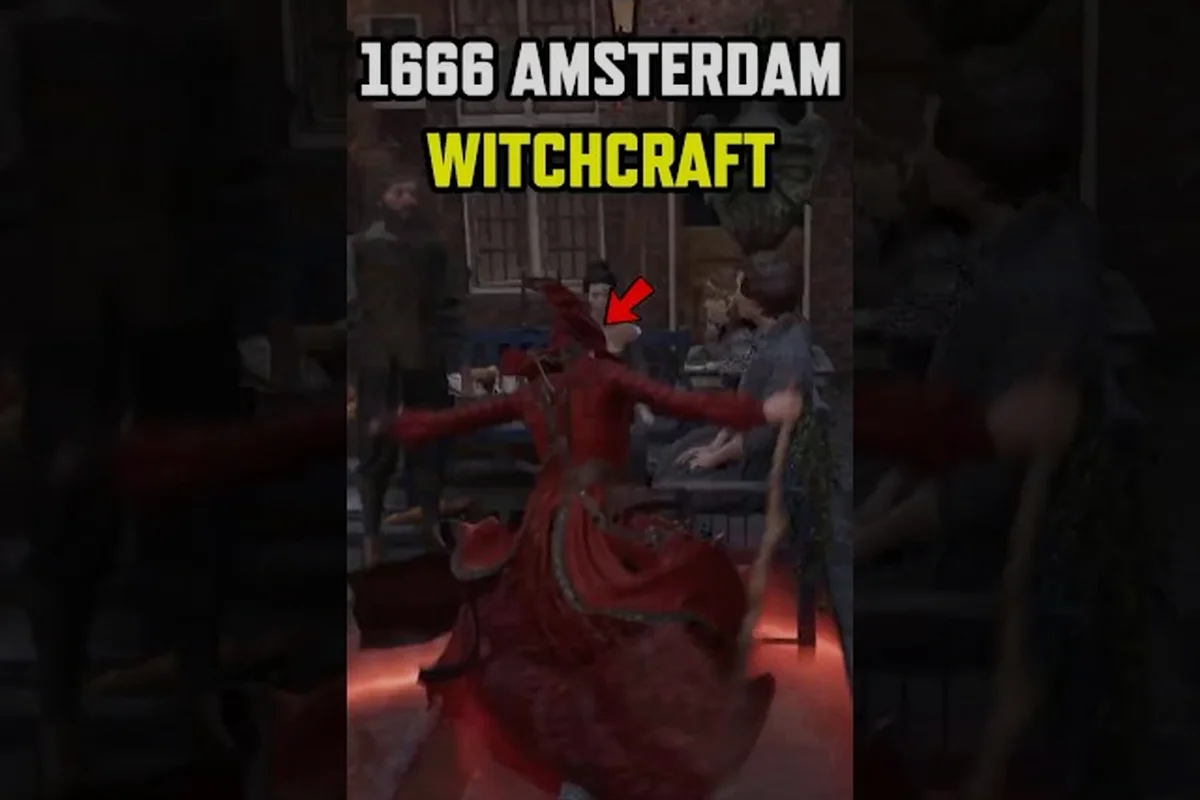
The 1666 Amsterdam witchcraft guide centers on a single loop: investigate handcrafted Amsterdam by day, then face your demons at night. Noa, the Collector, wields witchcraft to uncover demonic entities hiding behind human faces, and mastering the investigation phase determines whether your night encounters end in clean takedowns or desperate fights. Because the game launches into Early Access on August 25, 2026, understanding these systems now gives you a head start when the prologue's 30-minute narrative experience expands into the full sandbox.
This guide breaks down the complete witchcraft toolkit: how to investigate crime scenes efficiently, how to mark enemies for stealth eliminations, and how to use companion abilities to locate Originals before they locate you. We'll cover the day-night cycle mechanics, the marking system that separates skilled players from overwhelmed ones, and the companion synergies that make the Collector's job manageable. By the end, you'll know exactly what to do in your first five hours.
The Core Investigation Loop in 1666 Amsterdam Witchcraft
Every successful night in 1666: Amsterdam begins with thorough daytime investigation. The game's structure mirrors a detective procedural: you gather evidence, identify suspects, and only then do you confront the demonic Originals hiding among Amsterdam's citizens. According to the official Steam listing, the core loop revolves around investigating handcrafted Amsterdam by day and facing your demons at night — which means skipping investigation is the fastest way to get overwhelmed after dark.
Investigation Phase is when Noa uses her Collector abilities to scan environments for magical residue, hidden passages, and demonic traces. Each crime scene contains multiple clues, but not all clues matter equally. The key is learning to prioritize: Residual Magic Traces reveal where an Original walked, Tainted Objects mark items they touched, and Witness Testimony provides behavioral context that narrows your suspect list.
| Investigation Clue Type | What It Reveals | Night Utility |
|---|---|---|
| Residual Magic Traces | Paths Originals took through the district | Predict patrol routes and ambush points |
| Tainted Objects | Items an Original interacted with | Identify which NPCs are possessed |
| Witness Testimony | Behavioral patterns and alibis | Eliminate false suspects quickly |
| Gablestone Fragments | Hidden lore and district history | Unlock optional night objectives |
The Witch Senses ability, activated with a dedicated button, highlights all interactive elements within a radius. Community reports from the prologue suggest that Witch Senses has a limited range and a cooldown, so you cannot spam it. Instead, you must methodically sweep each area, which rewards players who learn the district layouts rather than those who rush through dialogue.
When you locate a clue, Noa performs a short Channeling Animation that reveals the memory attached to the object. These sequences are skippable on repeat playthroughs, but first-time players should watch them because they contain visual cues about the Original's identity — a distinctive gait, a specific clothing detail, or a verbal tic that appears later during night encounters.
How to Investigate Crime Scenes Efficiently
Learning how to investigate in 1666: Amsterdam means understanding the three-layer approach that veteran players use to clear districts quickly. The first layer is Visual Sweep: walk the perimeter of the crime scene and look for environmental anomalies — disturbed furniture, blood trails, broken locks, or unusually clean surfaces. The second layer is Witch Senses Scan: activate your ability to reveal hidden clues that the naked eye misses. The third layer is Companion Cross-Reference: use your chosen companion's unique perception to catch details Noa's witchcraft cannot detect.
Scene Prioritization matters more than most players expect. Each district contains multiple crime scenes, and the order you investigate them changes the night's difficulty curve. Based on community testing from the free prologue, investigating the Primary Scene first (the one with the most Residual Magic Traces) gives you the strongest lead on the Original's identity. Secondary scenes provide supporting evidence that narrows your options but rarely reveals the full picture alone.
| Investigation Order | Time Cost | Information Gain | Risk Level |
|---|---|---|---|
| Primary Scene First | Highest | Full Original identity | Low (daytime) |
| Secondary Scenes First | Medium | Partial suspect list | Medium |
| Witness Interviews First | Lowest | Behavioral context only | High (night) |
The Evidence Board in Noa's safehouse consolidates all gathered information into a visual map. Each clue you collect adds a card to the board, and connecting related cards reveals Suspect Profiles. This system rewards thorough investigation because complete profiles unlock Marking Bonuses during night encounters — you can mark enemies faster and maintain the mark for longer durations.
Community data from the r/1666Amsterdam subreddit indicates that players who complete all available investigation objectives before nightfall report significantly smoother combat encounters. The game does not force you to investigate everything, but the difficulty curve assumes you have at least seventy percent of the available clues. Going in blind with minimal investigation turns even basic demon encounters into punishing fights.
How to Mark Enemies for Stealth Takedowns
The marking system is the heart of this 1666 Amsterdam witchcraft guide because it bridges the gap between investigation and combat. When Noa identifies an enemy — either through daytime investigation or nighttime Witch Senses — she can place a Witch Mark on them. This mark serves multiple purposes: it tracks the enemy through walls, highlights their attack telegraphs, and enables Stealth Takedown prompts when you approach from behind.
Learning how to mark enemies effectively requires understanding the Marking Range and Mark Duration mechanics. Your base marking range is approximately fifteen meters, extendable through the Perception Skill Tree upgrades. Mark duration starts at ten seconds but resets whenever the marked enemy is within your line of sight. This creates an interesting tension: you want to keep enemies visible to maintain marks, but visibility also means they can detect you.
| Mark Type | Unlock Condition | Effect | Duration |
|---|---|---|---|
| Basic Witch Mark | Default ability | Tracks enemy through walls | 10 seconds |
| Persistent Mark | Perception Skill Tier 2 | Survives line-of-sight breaks | 15 seconds |
| Vulnerability Mark | Perception Skill Tier 3 | Increases damage taken by 20% | 8 seconds |
| Chain Mark | Perception Skill Tier 4 | Spreads to nearby enemies | 5 seconds per hop |
Stealth Takedowns require a marked enemy that is unaware of your presence. Approach from behind and hold the interact button to trigger the elimination animation. According to community reports, takedowns are silent and do not alert nearby enemies — provided you are outside their detection radius. The Detection Radius varies by enemy type: Lesser Demons have a narrow forward cone, while Originals possess a full 360-degree awareness that makes stealth approaches significantly harder.
The Mark Priority System lets you assign up to three marks simultaneously. This is crucial for multi-enemy encounters because it lets you track the entire battlefield. The optimal strategy, based on player experiences shared in community forums, is to mark the Highest Threat Enemy first (usually an Original or a heavily armored demon), then mark Adds that might flank you, and finally mark a Escape Route — a path through the environment that stays clear of enemy patrols.
Using Companion Abilities to Find Originals
The Gablestone Method for Scene Prioritization
Amsterdam's handcrafted gablestones—the decorative facade stones seen in the IGN Live 2026 extended trailer—serve as visual anchors for efficient crime scene investigation. Instead of sweeping every canal house, use these landmarks to triangulate search zones: each gablestone marks a distinct property boundary, and demonic entities typically leave traces within two house-widths of their entry point. Prioritize scenes near gablestones depicting animals or mythical creatures, as the extended trailer suggests these correlate with Original activity patterns more frequently than merchant or trade symbols.
Night Encounter Loadout: Day-Night Cycle Synergy
The day/night cycle (#3 in Panache's feature video series) directly dictates loadout viability: daytime investigation builds reveal enemy positions, but night encounters require a different witchcraft loadout optimized for the Esbat's demonic spawns. Since 1666: Amsterdam is Windows-only with full controller support, bind your two most-used witchcraft abilities to shoulder buttons for night encounters—this minimizes menu navigation during Originals' attack windows. The Steam Cloud save system allows you to maintain separate loadout presets for day and night without manual reconfiguration, a critical advantage given the cycle's forced transitions.
The 1666 Amsterdam companion guide portion of this article focuses on how your chosen ally expands your investigative and marking capabilities. The game features a dual protagonist system with Noa and Aaron the Cat, but you also select a companion during the Commencement ritual in the prologue. Each companion brings a distinct perception ability that complements Noa's witchcraft in different ways.
Aaron the Cat provides Feline Perception, which highlights moving creatures through walls and alerts you to patrol routes. His small size lets him access vents and crawlspaces that Noa cannot enter, revealing hidden clues and alternate paths. When you need to find Originals that are actively hunting you, Aaron's ability to sense movement is invaluable because it reveals their position before they reveal themselves.
| Companion | Perception Ability | Best For | Investigation Bonus |
|---|---|---|---|
| Aaron the Cat | Feline Perception (movement detection) | Tracking moving Originals | Hidden path discovery |
| The Scholar | Arcane Resonance (magic detection) | Finding Tainted Objects | Lore and history context |
| The Hunter | Blood Scent (biological detection) | Tracking wounded enemies | Takedown damage bonus |
The Scholar offers Arcane Resonance, which detects magical signatures rather than physical movement. This companion excels at finding Tainted Objects and Residual Magic Traces that Noa's Witch Senses might miss. If your playstyle favors thorough investigation over direct confrontation, the Scholar's ability to reveal hidden magical connections between seemingly unrelated clues will accelerate your progress significantly.
The Hunter provides Blood Scent, a tracking ability that follows biological traces. This is particularly useful after you wound an Original during a night encounter — the Hunter can track the bleeding enemy back to its lair, allowing you to finish the fight on your terms rather than chasing through unfamiliar territory. Community reports suggest the Hunter's tracking ability also reveals enemy weaknesses when you examine their blood trails.
The companion selection happens during the Commencement in the prologue, and the choice persists into the full game. While you can switch companions at certain story beats, the game encourages commitment to a single companion by gating their skill tree progression behind usage. Players who spread their attention across multiple companions report slower progression overall, so choose based on your preferred playstyle rather than trying to unlock everything.
Advanced Witchcraft Tactics for Night Encounters
Once you understand the basics of investigation and marking, the 1666 Amsterdam witchcraft guide moves into advanced territory: combining all systems during night encounters. The Esbat — the night when Originals are strongest — transforms familiar daytime districts into hostile hunting grounds. Your preparation determines your survival.
Mark Chaining is the first advanced technique to master. When you mark an enemy and eliminate them, the mark transfers to the nearest unmarked enemy within a short radius. This creates a cascade effect that lets you maintain battlefield awareness without constantly reapplying marks. The chain breaks if you take damage, so maintaining situational awareness is critical.
Investigation-Driven Loadouts represent the second advanced concept. The clues you gather during the day unlock specific Witchcraft Modifiers that can be applied to your abilities. For example, finding a Tainted Object connected to fire damage unlocks a Fire-Infused Mark that deals burn damage over time. These modifiers stack with your base abilities, creating build variety that rewards thorough investigation.
| Modifier Type | Investigation Source | Combat Effect | Stack Limit |
|---|---|---|---|
| Fire-Infused Mark | Tainted Object (burned) | Adds burn damage to marked enemies | 2 |
| Frost-Infused Mark | Tainted Object (frozen) | Slows marked enemies | 2 |
| Shadow-Infused Mark | Hidden passage discovery | Increases stealth takedown range | 1 |
| Lightning-Infused Mark | Storm-related clue | Chains damage between marked enemies | 3 |
Patrol Route Prediction becomes possible when you combine Aaron's Feline Perception with daytime observation. Each district has a set of patrol patterns that Originals follow, and these patterns are partially visible during investigation — you can spot worn paths, disturbed vegetation, or guard posts that indicate regular movement. Mapping these routes during the day lets you plan ambush points for night encounters.
The Escape Route Planning technique involves identifying at least two safe paths out of any encounter area. Originals can block exits, and the game's AI actively cuts off escape routes when it detects you retreating. By marking escape routes as part of your initial mark priority, you maintain awareness of your options even when combat becomes chaotic. For a deeper dive into combat mechanics, the night combat guide covers spell rotations and enemy-specific counters.
Match Your Loadout to the Encounter's Weakness
The Esbat Loop: From Commencement to Original Confrontation
The core investigation loop is bookended by two distinct phases: the 30-minute Prologue (App 4519690) introduces the Commencement ritual where Noa chooses her companion, but the full Esbat cycle—investigation, tracking, and confronting Originals—only begins in the full game. This means the Prologue's companion choice carries forward, so your selection during the free June 5, 2026 release directly dictates your tracking capabilities during the first full Esbat. Plan your initial companion pick around the district you intend to investigate first, as swapping companions mid-Esbat is not confirmed.
Companion Tracking: Matching Abilities to Original Behavior
The companion you select during the Commencement is not cosmetic—their tracking ability determines how Originals are revealed. The cat gameplay shown in the IGN Live 2026 trailer (featuring Aaron) suggests a feline companion excels at navigating narrow canal-side ledges and rooftop routes that Noa cannot access, effectively scouting vertical escape paths Originals use. When choosing a companion, match their mobility type to the Originals' known territory: Aaron's cat form is optimal for the dense, multi-level Jordaan district, while a more direct-tracking companion suits open canal squares where Originals blend into crowds.
The final section of this guide focuses on loadout construction because the 1666 Amsterdam witchcraft guide would be incomplete without practical recommendations. Your loadout consists of three components: Active Witchcraft Abilities, Passive Perception Upgrades, and Companion Skills. Each encounter type demands a different configuration.
Stealth-Focused Loadouts prioritize Perception Skill Tree investments that extend marking range and duration. The Silent Mark upgrade removes the audio cue when you mark an enemy, which is essential for multi-enemy stealth sections. Pair this with Aaron's Feline Perception to maintain awareness of all enemy positions while you pick off targets one by one.
Confrontation Loadouts sacrifice stealth for raw power. The Vulnerability Mark upgrade increases damage taken by marked enemies, and stacking this with Chain Mark lets you debuff entire groups simultaneously. The Hunter companion's Blood Scent provides a damage bonus against tracked enemies, creating a synergy that melts even Originals when executed correctly.
| Encounter Type | Recommended Loadout | Key Upgrades | Companion |
|---|---|---|---|
| Stealth Infiltration | Silent Mark + Extended Range | Perception Tier 2-3 | Aaron the Cat |
| Direct Confrontation | Vulnerability + Chain Mark | Perception Tier 3-4 | The Hunter |
| Investigation Heavy | Arcane Resonance + Clue Detection | Witch Senses upgrades | The Scholar |
| Mixed Approach | Balanced marks + escape routes | Perception Tier 2 + Mobility | Aaron the Cat |
Resource Management plays a critical role in loadout effectiveness. Witchcraft abilities consume Essence, which regenerates slowly during the day and faster at night. Marking enemies costs a small amount of Essence per mark, while takedowns refund a portion of the cost. This creates a sustainable loop: mark, eliminate, regain Essence, repeat. Players who spam marks without eliminating enemies quickly run dry and lose their tactical advantage.
The Gablestone Collection system ties into loadout construction because these collectibles unlock permanent passive bonuses. According to the extended trailer showcased at IGN Live 2026, gablestones are scattered throughout Amsterdam and provide stat boosts when collected. Prioritizing gablestones that enhance Perception or Essence regeneration directly improves your witchcraft effectiveness. For a complete list of collectible locations, the walkthrough part 2 covers the first Esbat cycle in detail.
If you want to understand the Originals themselves — their identities, motivations, and attack patterns — the witchcraft characters guide provides a full breakdown of every antagonist you will face. Understanding your enemies is the final piece of the puzzle, and it transforms the witchcraft guide from a mechanical manual into a complete strategy resource.
Frequently Asked Questions
What is the best companion for beginners?
Aaron the Cat is the most forgiving companion for new players because his Feline Perception provides constant enemy awareness, reducing surprise encounters. His small size also unlocks alternate paths that bypass dangerous areas entirely. The Scholar is a close second if you prefer thorough investigation, but Aaron's combat utility makes him the safer choice.
How do I mark enemies in 1666: Amsterdam?
Aim at an enemy within fifteen meters and press the mark button while your Witch Senses are active. The enemy becomes highlighted and tracked through walls for ten seconds. Upgrade the Perception Skill Tree to extend marking range and duration, and unlock Vulnerability Mark for a damage bonus against marked targets.
Can I switch companions after choosing one?
Yes, but the game discourages frequent switching because companion skill trees progress only through usage. The companion you choose during the Commencement in the prologue gains experience when you use their abilities. Switching resets your progression on the previous companion, so commit to one for the majority of your playthrough.
How long does the investigation phase last?
Daytime investigation lasts until you trigger the night transition, which happens when you exhaust all available clues or choose to confront the Original early. The game does not force a specific investigation duration, but community testing suggests that completing at least seventy percent of available clues produces the most manageable night encounters.
What happens if I skip investigation entirely?
Skipping investigation entirely is possible but brutal: without Witch Senses marks and Evidence Board clues, you cannot identify Originals among civilians, making stealth takedowns nearly impossible. The prologue's 30-minute loop punishes this—you'll face unmarked demons at night with no companion intel. Stick to day investigation; it's the core loop.